


LevoitAir at home
Cleaning
isn’t enough.
Dust and particles still float long after you clean. Explore the 3 key steps for cleaner air.1
Map your indoor air
Where indoor air pollutants come from.
Some start inside your home. Others drift in from outside. Tap a spot to see what it gives off, whether it’s a particle or a gas, and what helps.

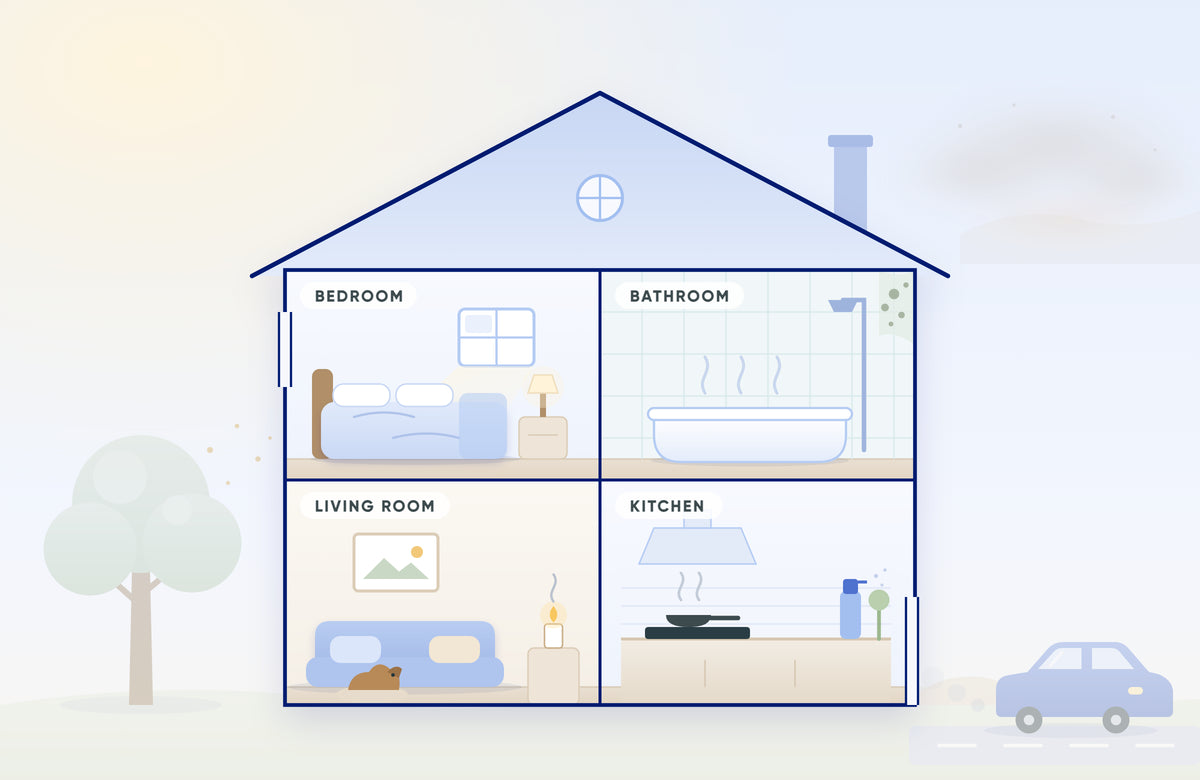
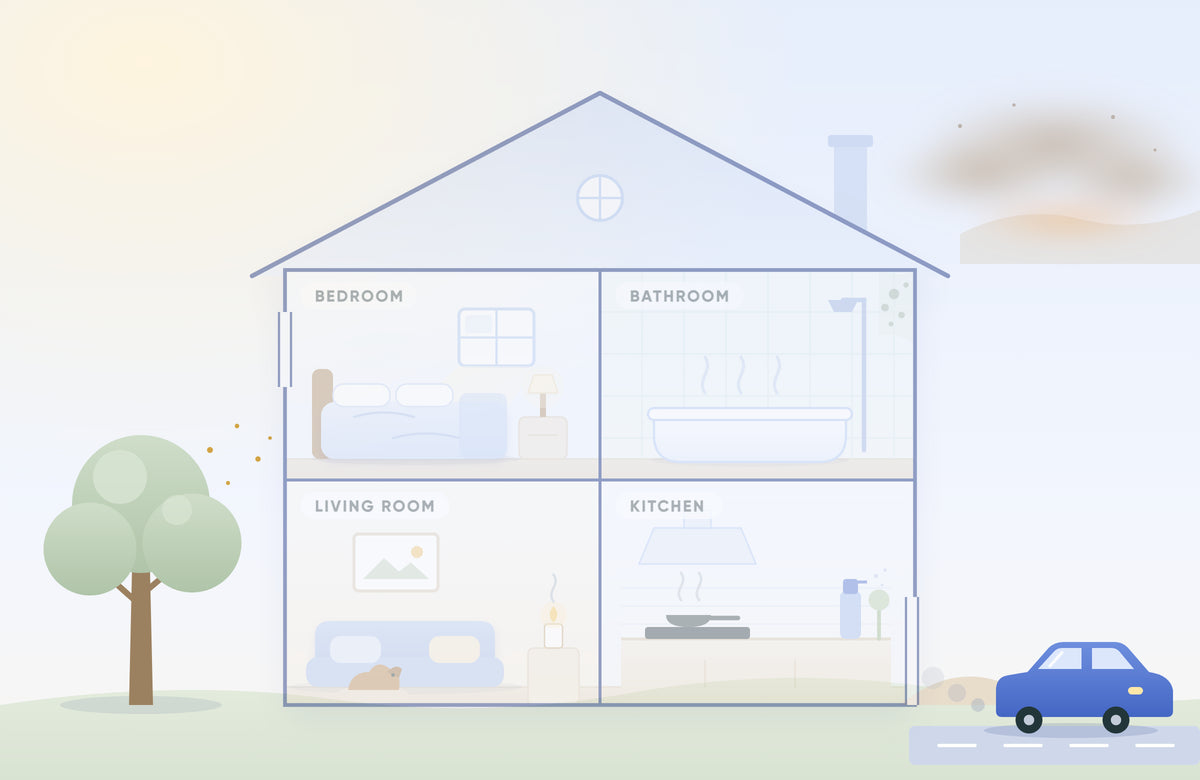
Dust from bedding
Bedding, mattresses, pillows, and carpet collect dust. Making the bed or walking across the carpet lifts it into the air for a while.
- At the sourceWash sheets weekly in hot water and use allergen-proof covers.
- Fresh airAir the room out when the outdoor air is clean.
- Air cleaningAn air purifier with a HEPA filter is designed to capture what's airborne.
Pet dander
Tiny flakes of skin from dogs and cats are light enough to stay in the air, and can travel to rooms the pet never enters.
- At the sourceBrush pets outdoors, wash their bedding, and keep them off your bed.
- Fresh airOpen a window after grooming, when the outdoor air is clean.
- Air cleaningAn air purifier with a HEPA filter is designed to capture airborne dander.
Candle and fireplace smoke
Candles, incense, and wood fires release very fine particles and some gases as they burn.
- At the sourceBurn less often and keep wicks trimmed.
- Fresh airCrack a window or run a fan while something's burning.
- Air cleaningA purifier’s main filter captures fine particles; activated carbon can help with smoke odors.
Cooking smoke and gas-stove fumes
Frying, searing, and burning food give off fine particles. Gas stoves also release nitrogen dioxide.
- At the sourceCook on the back burners and avoid burning food.
- Fresh airRun a range hood that vents outside or open a window.
- Air cleaningA purifier’s main filter captures the particles; activated carbon can help reduce odors and gases.
VOCs from cleaners and new furniture
Cleaning sprays, air fresheners, paint, and pressed-wood furniture can give off volatile organic compounds (VOCs).
- At the sourceChoose low-VOC or fragrance-free products and let new furniture air out.
- Fresh airVentilate while you clean, paint, or unpack.
- Air cleaningA purifier’s main filter doesn't capture gases. Activated carbon can help reduce VOCs.
Aerosol sprays and powders
Hairspray, dry shampoo, spray deodorant and body powder put a fine mist or dust into the air of a small room.
- At the sourceChoose pump sprays or fragrance-free products when you can.
- Fresh airRun the bathroom fan or crack a window while you use them.
- Air cleaningAn air purifier with a HEPA filter is designed to capture airborne particles.
Pollen
It comes in through open windows and doors, and on shoes, clothes, hair, and pets.
- At the sourceShower and change after time outside and wipe pets down.
- Fresh airCheck the pollen forecast and keep windows shut on high days.
- Air cleaningAn air purifier with a HEPA filter is designed to capture airborne pollen.
Vehicle exhaust
Traffic gives off fine particles and gases like nitrogen dioxide that drift indoors, especially near busy roads.
- At the sourceKeep street-side windows closed at rush hour.
- Fresh airOpen windows on the quieter side or when traffic is light.
- Air cleaningA purifier’s main filter captures fine particles; activated carbon can reduce some gases.
Wildfire smoke
Smoke can travel hundreds of miles, and it seeps in through windows, doors, and gaps.
- At the sourceCheck the air quality index on smoky days.
- Fresh airKeep windows and doors shut while smoke is around.
- Air cleaningThe U.S. EPA suggests a portable air purifier sized for the room on smoky days.
Sources: U.S. EPA, “The Inside Story: A Guide to Indoor Air Quality”; “Wildfires and Indoor Air Quality”; “Guide to Air Cleaners in the Home.”3 General education about common sources, not a reading of your home.
Small, smaller, smallest.
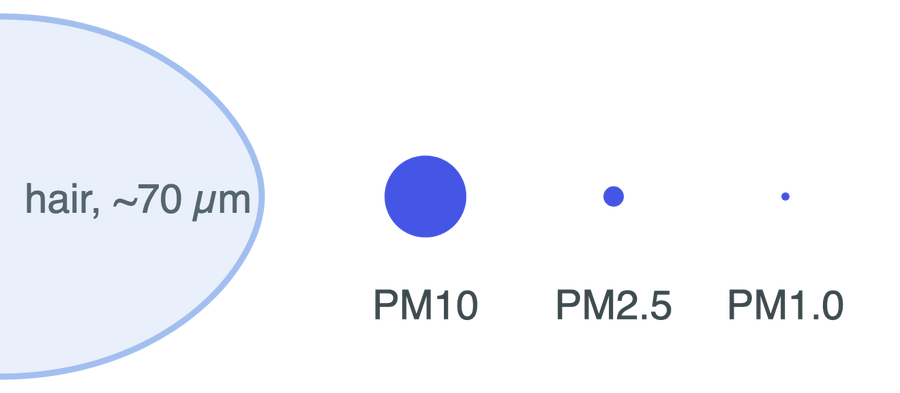
Many pollutants are particles, and particles are measured by size. Pick one to see how small it gets.
PM10: Up to 10 microns
The largest of the three ranges. The biggest can catch the light in a sunbeam.
About 1/7 the width of a hair.
PM2.5: Up to 2.5 microns
Too small to see, and light enough to stay in the air for hours.
About 1/30 the width of a hair.
PM1.0: Under 1 micron
The smallest of the three, and the slowest to settle.
About 1/70 the width of a hair.
Go one level deeperWhy does size matter? Why
The numbers are sizes in microns: PM10 is up to 10 microns wide, PM2.5 up to 2.5, PM1.0 under one. One strand of hair is about 70 microns wide.
Larger particles settle in minutes. The smaller a particle, the longer it floats, so the fine ones are the ones still in the air when you turn out the light.
Source: U.S. EPA, Particulate Matter (PM) Basics.
3 steps to improve your air quality.
The U.S. EPA’s three ways to improve indoor air, in order: control the source, bring in fresh air, then clean the air. The first two cost little or nothing.1
-
Free or low cost
Cut it off at the source
Shrink what feeds the problem in the first place.
- Wash sheets and pillowcases weekly in hot water
- Keep pets off the bed and brush them outdoors
- Put allergen-proof covers on the mattress and pillows

Wash sheets and pillowcases every week, in hot water They hold the dust, skin flakes and pet dander that build up right where you sleep. -
Free
Let fresh air in at the right time
Swap stale indoor air for outdoor air, when the outdoor air is clean.
- Check the pollen and air quality forecast before opening up
- Run the bathroom and kitchen fans while you shower and cook
- Keep windows shut on high-pollen and smoky days
Air quality good, pollen lowOpen a window for a whilePollen high or smoke nearbyKeep it shut, let layer 3 work -
An investment
Clean the air that’s left
Even after the first two steps, particles can remain airborne. An air purifier properly sized for your room helps capture them.
- Pick one that’s sized to your room
- Run it where you sleep, with the door closed
- Let it run all night on a quiet setting


Go one level deeperWhy does the source come first? Why
A filter can only catch what reaches it. Much of the dust in a bedroom is fairly heavy, so it stays in the bedding until something stirs it up.
Hot washes and covers cut the supply. Fresh air dilutes what’s left. A purifier captures what’s still in your air. Each layer makes the next one’s job smaller.
- Source controlUsually does the most
- Fresh airWhen outdoor air is clean
- Air cleaningCaptures airborne particles
Source: U.S. EPA, The Inside Story: A Guide to Indoor Air Quality.

How to choose a purifier.
For airborne particles, the U.S. EPA says portable air purifiers can reduce indoor pollutant levels, especially alongside source control and fresh air.2 They don’t clean surfaces or bedding, and a HEPA filter alone doesn’t remove gases.
How to choose an air purifierYour top questions, answered.
This page is general education about indoor air. It can’t tell what’s in your home or what’s causing any symptoms, and it isn’t medical advice. For health questions, talk with a doctor.
How to choose a purifier.
Five steps that separate a purifier that cleans your air from one that just moves air around.
Not ready yet? Keep reading.
Short reads from the Levoit Air Journal on bedrooms, pets, and indoor air.


