The Nose Knows: What a Carbon Filter Actually Does
-
1 min read
Ever walked back into your house after a weekend away and immediately noticed... something? Maybe it's last night's salmon, the dog's favorite spot on the couch, or a candle that overstayed its welcome.
If your air purifier didn't catch any of it, there's a good chance it's missing the one component built specifically for smells: a carbon filter. Here's what a carbon filter actually does, how it works, and why replacing it on schedule matters more than most people realize.
What is a Carbon Filter?
A carbon filter is made from activated carbon, sometimes called activated charcoal. This material is processed to be full of tiny pores, which gives it a remarkably large amount of surface area relative to its size.
That surface area is what makes it so effective at trapping gas. Not solid particles, but gas. You'll usually find carbon filters paired with a particle filter inside an air purifier, since each one handles a completely different job.
How Does a Carbon Filter Work?
Carbon filters work through a process called adsorption. It sounds like "absorption," but there's an important distinction:
- Absorption is like a sponge soaking up water, the liquid gets pulled inside the material.
- Adsorption is when molecules stick to the outside surface of a material rather than being absorbed into it.
Activated carbon is so porous that it offers an enormous surface area for odor and gas molecules to stick to as air passes through. Over time, that surface fills up. Once every spot is taken, the filter can't capture anything new, and odors start slipping through even though the filter still looks clean.
This is the main reason carbon filters need regular replacement on schedule rather than by appearance alone.
Particle Filter vs. Carbon Filter: What's the Difference?
These two get mixed up often. Here's the simple breakdown:
| Filter | Particle Filter | Carbon Filter |
|---|---|---|
| What it targets | Dust, pollen, dander, fine particles | Odors, gases, VOCs, smoke smell |
| How it works | Physical barrier traps particles | Adsorption, gas molecules stick to carbon surface |
Neither filter can do the other's job. A particle filter can leave a room looking spotless while it still smells like last night's dinner. A carbon filter can clear the smell but do nothing about the dust and pollen in the air.
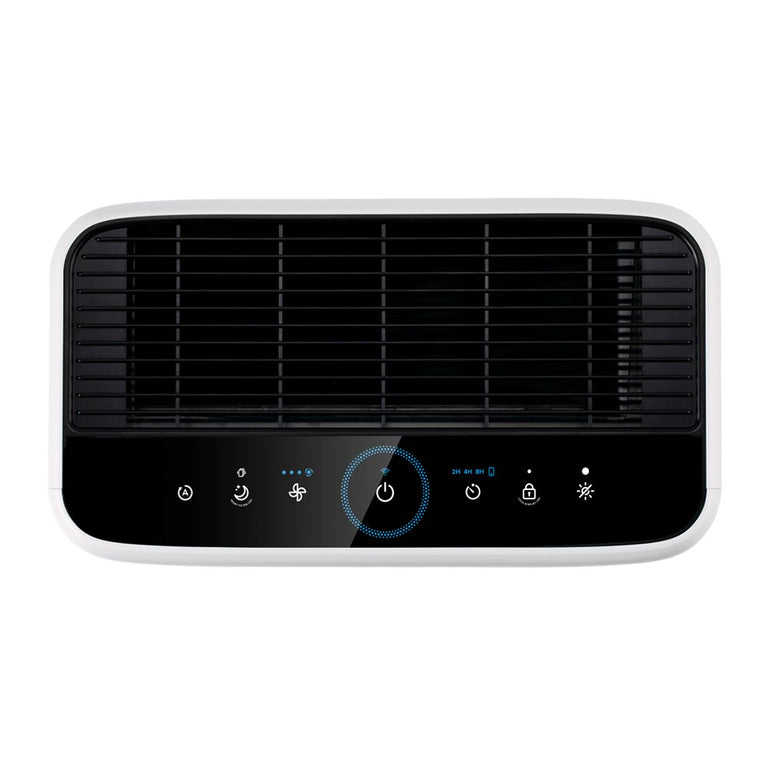
That's why most air purifiers, including the Levoit Eleva™ 300X, use both working together.

What Does a Carbon Filter Remove?
An activated carbon filter is generally effective against:
- Cooking smells: Fish, fried food, garlic, and other strong kitchen odors
- Pet odors: Dander-related smells and general pet odor that builds up over time
- Smoke: Carbon filters reduce smoke odor from cigarettes, fireplaces, and wildfires by targeting the smell and gas
- Household chemical fumes: From cleaning products, paint, and new furniture
- VOCs (volatile organic compounds): Activated carbon is one of the most common materials used to reduce VOCs indoors
What it won't do: catch fine particles like dust and pollen. That's the particle filter's job.
Carbon Filter Types: Not All Are Built the Same
"Carbon filter" is a catch-all term. The amount and type of carbon inside makes a real difference:
- Standard carbon filters: Handle everyday cooking smells or a musty room, but can get overwhelmed in homes with stronger odors
- Pet-formula filters: Pack in extra carbon and additives specifically built for pet odor
- Smoke-formula filters: Designed for tougher, more lasting odors from cigarettes, wildfires, or fireplaces
- Premium carbon filters: Hold more carbon overall, which means more capacity before odors start slipping through
If a standard filter isn't cutting it, you likely don't need a new air purifier; you just need the right specialty filter for your home.
How Long Does a Carbon Filter Last?
Carbon doesn't wear out the way a particle filter does. A particle filter visibly clogs with dust. A carbon filter gets "full" in a quieter way.
Once its pores are saturated, it stops adsorbing anything new. Odors can start passing through even though the filter still looks perfectly clean. That's the tricky part — a saturated carbon filter often shows no visible signs of wear.
This is why sticking to a replacement schedule matters more than waiting until you notice a smell. Manufacturer guidelines and real-time usage tracking are the most reliable ways to know when it's time.
How the Eleva 300X Makes Carbon Filter Replacement Simple
Many air purifiers use one combined filter, which means you replace the entire odor and particle system at once, even if only one part has reached the end of its life.
The Levoit Eleva™ 300X uses a modular filter design called DuoShield™ Technology that keeps the HEPA and carbon filters completely separate. Here's why that matters:
- Replace only what needs replacing: Swap out the carbon filter when odors return without discarding a HEPA filter that still has life left in it
- No guesswork: The VeSync app tracks filter usage in real time so you know exactly when it's time for a change
- Specialty options available: Choose the carbon filter formula that fits your home, whether that's for pets, smoke, or everyday odors
It's a small design choice with a meaningful payoff: less waste, less guesswork, and a home that smells the way you want it to.
Your Home Should Smell Like Yours
Odor control isn't a "set it and forget it" feature. It's a filter doing real work — and that work eventually needs a refresh.
Once you understand the difference between particle and carbon filtration, and which specialty filter fits your home, you're in control. No more guessing, and no more walking back into a house that tells on itself.
Explore the Levoit Eleva™ 300X and see how a modular filter system can take the guesswork out of keeping your space fresh.
The information provided here is for informational and educational purposes only and should not be used in medical emergencies or for diagnosing or treating any medical condition. It's crucial to consult a licensed medical professional for diagnosis and treatment. External links are for informational purposes and do not constitute endorsements. No warranty of any kind, either expressed or implied, is made as to the products and/or the accuracy, reliability, timeliness, or correctness of the information provided herein.