


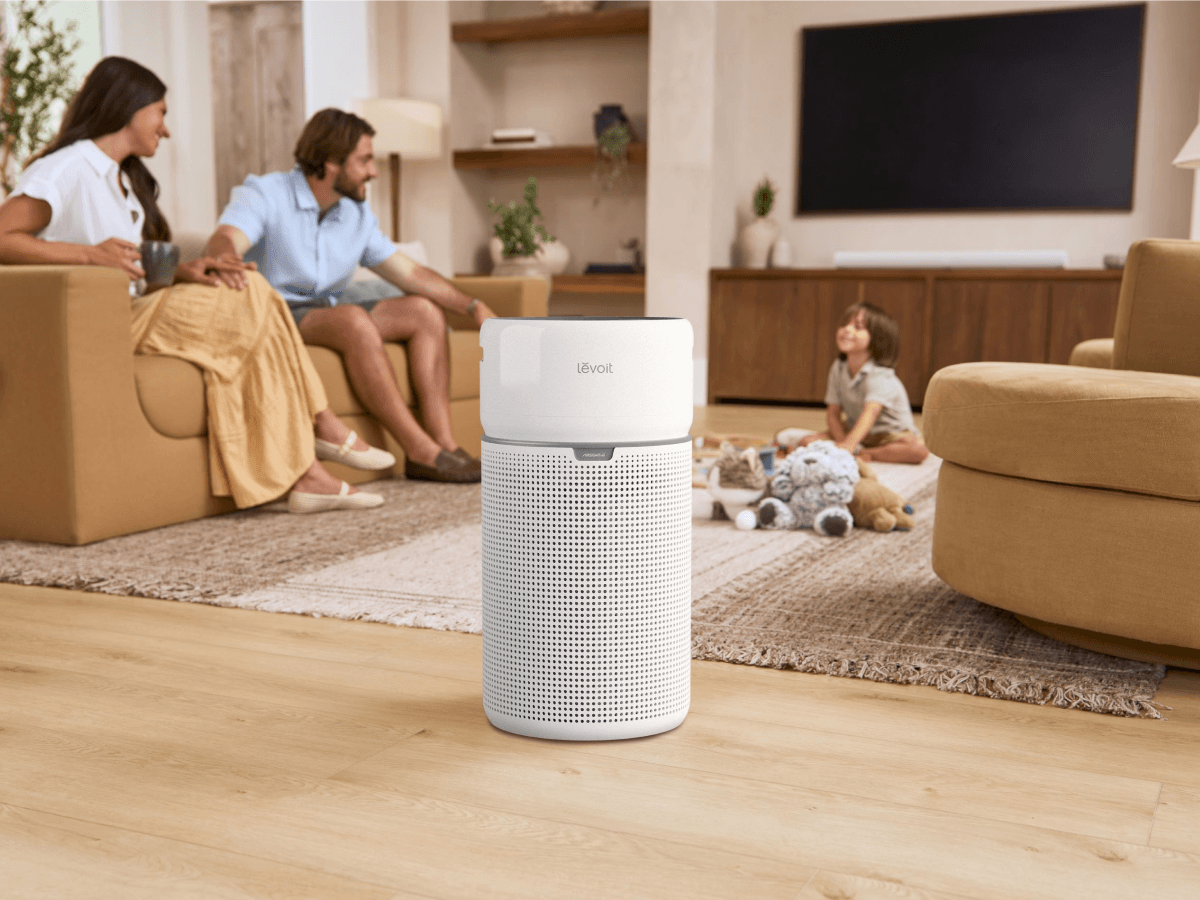
How Can Air Purifiers Help With Seasonal Allergens?
Air purifiers can help during allergy season by capturing airborne pollen and other particles before they continue circulating indoors. High-efficiency filtration can capture particles such as pollen, dust, and pet dander, helping keep indoor air cleaner during seasonal pollen peaks. Rather than addressing seasonal allergies themselves, an air purifier works directly on the particles in your home's air.
How Do Seasonal Allergens Get Into Your Home?
Pollen and other outdoor particles have plenty of ways to make their way indoors. Opening a window or door can allow outdoor air in, while particles can also hitch a ride on clothing, shoes, hair, and pets.
Your home's HVAC system and everyday trips in and out can contribute to the movement of particles as well. Once indoors, pollen can circulate through the air before settling onto floors, furniture, and other surfaces.
That's why staying indoors doesn't necessarily mean leaving seasonal allergens behind.
For more ways to manage pollen around your home, explore Levoit's Spring Allergy Protection Guide or learn more with Pollen 101.
How Air Purifiers Help Reduce Airborne Allergens
Air purifiers draw surrounding air into the unit, pass it through filtration, and return filtered air to the room. Particle filtration can capture airborne pollen, dust, pet dander, and other particles as air passes through the purifier.
However, an air purifier doesn't remove the source of seasonal allergens. Pollen can still enter your home, so filtration works best as one part of a broader cleaning and indoor-air routine.
If you're choosing an air purifier for seasonal allergens, focus on what the purifier does to the air rather than claims about allergy symptoms. Here are four practical factors to consider.
1. Filtration
Look for filtration designed to capture airborne particles such as pollen and dust. Some air purifiers also use activated carbon filtration, which can help address certain gases and odors.
Keep in mind that particle and gas filtration serve different purposes. The right combination depends on what you want to filter from your indoor air.
2. Room & Space Size
A purifier needs enough airflow for the room where you'll use it. Clean Air Delivery Rate (CADR) indicates how much filtered air an air cleaner delivers. Generally, a higher CADR means faster particle filtration and suitability for a larger area.
Check both CADR and recommended room coverage when comparing models. Large rooms, open floor plans, and high ceilings may require greater airflow or more than one air purifier.
3. What You Want to Filter
Think about your biggest indoor air concerns. Pollen, dust, pet dander, and smoke are airborne particles, while odors and certain gases require different filtration.
For broader air-quality concerns, consider a purifier that combines high-efficiency particle filtration with activated carbon filtration.
4. Budget & Everyday Needs
Air purifier prices vary based on room coverage, filtration, airflow, noise levels, and additional features. Smart controls and automatic modes can add convenience, but they aren't necessary for every space.
Consider ongoing needs, too, including filter maintenance, energy use, noise, and where you'll place the purifier. The best fit is one that delivers the performance you need while fitting naturally into your routine.
How to Use an Air Purifier During Allergen Season
Once pollen levels rise, how you use your purifier matters just as much as which model you choose.
- Choose your placement. Put the purifier in a room where you spend plenty of time and give its air inlet and outlet enough clearance for airflow.
- Run it consistently. Regular operation allows the purifier to continue filtering airborne particles as they enter and circulate through the room.
- Watch windows & doors. Keeping them closed during high-pollen periods can limit the amount of outdoor pollen entering your home.
- Maintain the filter. Follow your purifier's instructions for cleaning and replacing filters. An overloaded filter won't perform as effectively.
- Keep cleaning. Vacuuming and wiping surfaces can address particles that have already settled while your purifier focuses on what's airborne.
Levoit Air Purifiers for Seasonal Allergens
Different spaces call for different levels of airflow and coverage. Instead of looking for one universal best air purifier for seasonal allergens, consider the room you want to filter and the features that matter most.
For Larger Spaces: Eleva™ 500X
The Levoit Eleva™ 500X Smart Air Purifier is designed for larger spaces, with an ideal room size of 467 ft² at 4.8 air changes per hour (ACH) and a pollen CADR of 319 CFM. Its fully sealed MaxSeal™ HEPA filtration captures 99.97% of airborne particles down to 0.3 microns, including pollen, dust, and pet dander.
It also combines particle filtration with a replaceable activated carbon filter and uses built-in sensors to detect PM10, PM2.5, PM1.0, VOCs, and NO₂.

For Bedrooms or Medium-Sized Rooms: Eleva™ 300X
The Eleva™ 300X is designed for small to medium rooms, with an ideal room size of 250 ft² at 4.8 ACH and a CADR of 161 CFM. Its fully sealed MaxSeal™ HEPA filtration captures 99.97% of 0.3-micron airborne particles, including pollen, dust, and dander.
Its AirSight® Plus 2.0 sensor tracks PM1.0, PM2.5, and PM10, while Auto Mode can adjust fan speed in response to detected air quality.

For Smaller Spaces: Levoit Core® Mini-P
For a compact bedroom, office, or other personal space, the Core® Mini-P offers 3-stage filtration designed to trap airborne particles including fine dust, pollen, and pet dander. Its ideal room size is 53 ft² at 4.8 ACH or up to 254 ft² at 1 ACH.

Explore more Levoit air purifiers for airborne allergens to compare options for your space.
Cleaner Indoor Air During Pollen Season
Seasonal allergens don't always stay outdoors. Pollen can enter through doors and windows or travel inside on clothing, shoes, and pets, then continue circulating through your indoor air.
An air purifier provides ongoing filtration for those airborne particles. Focus on filtration, CADR, room coverage, and everyday usability when choosing one, then combine regular filtration with smart cleaning habits to keep indoor air cleaner throughout pollen season.
FAQs
When Should I Start Running an Air Purifier During Allergen Season?
Consider running your purifier when seasonal pollen levels begin to rise in your area. Consistent operation can help capture airborne pollen as it enters and circulates indoors.
Should I Run My Air Purifier All Day During Allergen Season?
Air purifiers can be operated continuously when the manufacturer allows it. You can also use Auto Mode on compatible models to automatically adjust fan speed based on detected air quality.
Can I Use an Air Purifier With the Windows Open?
You can, but open windows allow more outdoor particles to enter. During periods of high pollen, keeping windows and doors closed can help limit pollen entering your indoor space.
Do Air Purifiers Remove Pollen?
Particle filtration can capture airborne pollen as air passes through the purifier. Performance depends on factors such as filtration efficiency, airflow, room size, placement, runtime, and maintenance.
Can an Air Purifier Help With Wildfire Smoke?
A properly sized portable air cleaner can filter airborne particles from wildfire smoke. The EPA recommends choosing a unit with a HEPA filter that is appropriately sized for the room; for wildfire smoke specifically, it recommends a tobacco-smoke CADR of at least two-thirds of the room's area in square feet.
Article Sources:
- American College of Allergy, Asthma & Immunology. "Air Filters."
- U.S. Environmental Protection Agency. "Guide to Air Cleaners in the Home."
- U.S. Environmental Protection Agency. "Preparing for Smoke and Heat."
The information provided here is for informational and educational purposes only and should not be used in medical emergencies or for diagnosing or treating any medical condition. It's crucial to consult a licensed medical professional for diagnosis and treatment. External links are for informational purposes and do not constitute endorsements. No warranty of any kind, either expressed or implied, is made as to the products and/or the accuracy, reliability, timeliness, or correctness of the information provided herein.