Evaporative Humidifiers: Key Benefits & How to Choose
-
1 min read
As colder months arrive or when heating and air conditioning run, dry air can cause problems. You might experience dry skin, sore throats, and respiratory irritation. If you're looking for a way to bring relief, a humidifier may be the perfect solution. However, with so many options on the market, how do you know which one is right for you?
At Levoit, we recommend evaporative humidifier—a popular choice among households. But what makes them different, and why are they the preferred option for many? In this guide, we’ll break down the unique benefits of evaporative humidifiers, how they work, and how to choose the best one for your home.
Evaporative Humidifiers 101: Your Complete Guide to Understanding the Basics
What is an Evaporative Humidifier?
At its core, an evaporative humidifier works by simulating the natural process of evaporation. It uses a fan and a filter to draw in dry air, add moisture to it, and then release it back into the room. Think of it like hanging a wet towel to dry – the air movement helps speed up evaporation, turning it into moisture for your environment.
How It Works:
The fan circulates air over the evaporative filter (or wick), which absorbs water from the water tank. This moisture is then evaporated into the air, increasing humidity levels. The filter plays an important role in the humidification process, as it also helps trap dust, bacteria, and other contaminants, making the air cleaner.
Key Components:
- Water Tank: Holds the water that is evaporated into the air.
- Evaporative Filter: Absorbs the water and facilitates moisture evaporation.
- Fan: Moves the air over the filter to speed up the evaporation process.
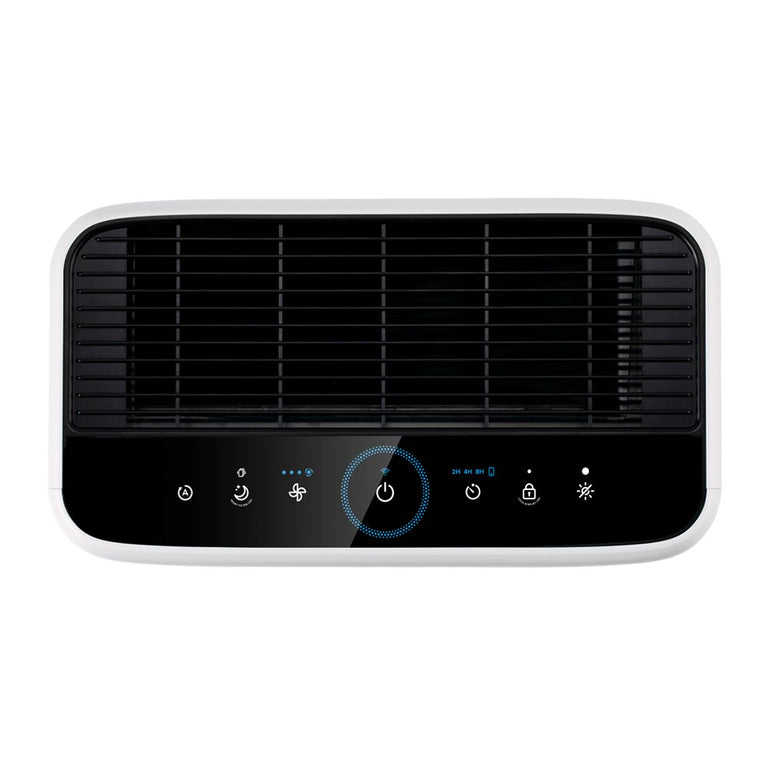
- Control Panel: Lets you set your desired humidity level or choose specific settings.
How to Choose the Best Evaporative Humidifier:
- Humidification Output: The amount of moisture the humidifier can release into the air.
- Room Size Compatibility: Choose a unit with the right capacity for your room size.
- Noise Level: Some models offer silent operation, ideal for bedrooms.
- Maintenance: Consider the ease of cleaning and filter replacement.
Evaporative vs Ultrasonic Humidifier vs Warm Mist Humidifiers: Full Comparison Table

When choosing a humidifier, it’s important to understand the differences between the various types on the market. Let’s break down the differences between evaporative humidifiers, ultrasonic humidifiers, and warm mist humidifiers.
|
Comparison |
Evaporative Humidifiers |
Ultrasonic Humidifiers |
Warm Mist Humidifiers |
|
Working Principle |
Natural evaporation (fan + filter) |
High-frequency vibration |
Boiling water to create steam |
|
Water Quality |
Tap water works well |
Requires purified/distilled water |
Tap water (may cause scaling) |
|
Core Benefits |
No white dust, gentle, energy-efficient |
Affordable, quick humidification |
High-temperature sterilization |
|
Potential Drawbacks |
Requires regular filter changes |
May promote bacteria growth, white dust |
High energy usage, risk of burns |
|
Maintenance Cost |
Medium (filter replacement) |
Low (cleaning ultrasonic plate) |
Medium (regular descaling) |
|
Ideal Users |
Families, babies, and sensitive individuals |
Budget-conscious, quick humidification |
Winter use, sterilization needs |
Core Decision-Making Conclusion:
- Choose evaporative humidifiers for health, long-term use, and gentle, efficient humidification.
- Choose ultrasonic models for affordable, rapid humidification.
- Choose warm mist humidifiers for winter warmth and sterilization.
Is Your Humidifier Evaporative? A Simple Guide to Identification
Wondering if your humidifier is evaporative? Here’s how to tell.
1. Visual Check:
Open the water tank and look for a removable evaporative filter (wick). If it’s visible and removable, it’s likely evaporative.
Check the air outlet. If there’s no visible mist (like ultrasonic models) or steam (like warm mist models), it’s probably evaporative.
2. Operational Check:
Run your humidifier with regular tap water for about a week. If there’s no white dust, it’s likely an evaporative humidifier.
You should see no bubbles or vibrations inside the tank, and the air feels like room temperature.
3. User Experience:
While running, the sound should be just a gentle airflow from the fan.
If your model needs filter replacement every 3-6 months, it’s a clear sign it’s an evaporative humidifier.
FAQ
Are evaporative humidifiers good for bedrooms?
Yes. Evaporative humidifiers are ideal for bedrooms because they produce no white dust, operate at a natural humidity output, and maintain room-temperature moisture.
Do evaporative humidifiers need distilled water?
No. They typically work well with tap water, making them more convenient than ultrasonic models.
Conclusion: Why an Evaporative Humidifier is the Right Choice for Your Home
For healthy, gentle humidification, evaporative humidifiers are a top choice for many. They offer low-maintenance, non-toxic moisture and are great for homes with babies or anyone seeking a natural, efficient way to combat dry air. Remember the three key features: no white dust, room-temperature mist, and regular filter replacement.
If you’re ready for clean, comfortable air at home, consider an evaporative humidifier for the right balance of performance and ease.